
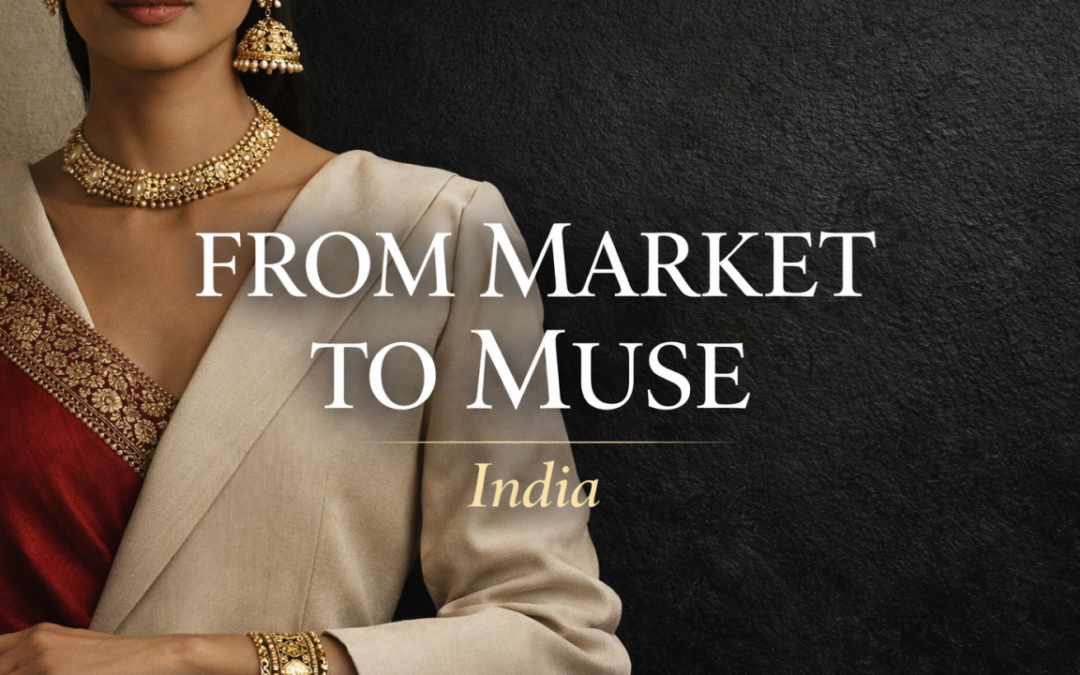
For decades, India has been positioned as the next great luxury market. A country of rising affluence. A vast consumer base. An opportunity waiting to be unlocked.
That framing is no longer sufficient. India today is not merely a market that luxury brands can enter. It is becoming a cultural force that is beginning to shape how luxury itself is defined.
The End of the “Emerging Market” Mindset
Global luxury has long approached India with a predictable playbook: enter, expand distribution, educate the consumer, and wait.
Implicit in this model is a belief — that luxury flows in one direction.
From the West to the rest.
That belief no longer holds.
What is unfolding in India is not just growth in consumption. It is a shift in cultural influence.
A Generation That Does Not Wait
India’s Gen Z is not inheriting luxury the way previous generations did.
They are:
- Globally exposed, yet deeply rooted
- Digitally native, yet culturally aware
- Aspirational, yet self-defined
They are not looking to adopt luxury. They expect luxury to reflect them. And that changes everything.

From Cultural Exception to Cultural Scale
Nearly a century ago, a few Indian royals moved seamlessly between India and Europe — balancing global exposure with cultural identity.
At the time, this duality was rare. Today, it is the norm. An entire generation now operates within this intersection — absorbing global influences while asserting local meaning. The difference is scale. What was once exceptional is now systemic.
Luxury as Cultural Dialogue
This shift fundamentally redefines luxury’s role.
India is no longer a market to be entered. It is a context to be understood.
And more importantly — a voice to be engaged.
Heritage, craftsmanship, and legacy still matter.
But they are no longer enough.
Because today’s consumer is not just evaluating what a brand makes.
They are interpreting what a brand means.
The Risk of Surface-Level Relevance
Many brands still approach India at a surface level.
Using motifs without meaning. Referencing culture without depth. Adapting aesthetics without understanding context.
In a market as layered as India, this is quickly recognised — and rejected.
Relevance cannot be borrowed.
It must be built.

The Parallel Responsibility of Indian Brands
This shift is not just a challenge for global players.
It is an opportunity for Indian brands.
For years, Indian luxury has been anchored in:
- Craftsmanship
- Heritage
- Artisanal excellence
These remain powerful.But global relevance now demands more.
Indian brands must evolve:
- From product to positioning
- From craft to culture
- From heritage to vocabulary
A vocabulary that is:
- Contemporary
- Globally legible
- Yet unmistakably rooted
The Capability Gap
Perhaps the most critical gap is not demand — but capability. Luxury consumption in India is accelerating. But the systems required to build luxury — across:
- Brand strategy
- Customer experience
- Organisational discipline
— are still evolving.
Luxury is not created at the point of sale. It is built through:
- Consistency
- Control
- And long-term intent
From Market to Muse
India’s role in the global luxury ecosystem is changing. It is no longer just a destination for growth. It is becoming a source of influence.
A place where:
- Identity is being redefined
- Culture is being reinterpreted
- And new expressions of luxury are emerging
India is becoming a muse.
Not symbolically.
But strategically.
A Shift That Cannot Be Ignored
For global brands, the implication is clear:
India cannot be approached as an afterthought.
It requires:
- Cultural intelligence
- Deeper engagement
- And a willingness to evolve
For Indian brands, the opportunity is equally clear: to move from participation to definition.
Conclusion
Luxury today is no longer defined by origin. It is defined by how meaning travels. And increasingly, that journey is being shaped by India.